
Geotechnical Engineering
State DOT Transportation Program
28 Field & Office Users
Southeast United States
MetroGeotech supports large-scale transportation and infrastructure projects across multiple districts. As project volume increased, their field teams were collecting extensive borehole and soil data using paper logs and spreadsheets. While the firm had strong internal QA standards, the manual process of transferring field notes into formatted reports created bottlenecks between site teams and office staff.
Field inspectors would return from project sites with handwritten logs that required manual entry and validation before reporting could begin. Office engineers often spend hours consolidating data from multiple sources, reformatting documentation, and correcting inconsistencies between field entries. As deadlines tightened and regulatory requirements became more stringent, the risk of documentation errors and delayed submissions grew.
Leadership recognized that their existing workflow limited scalability. To support larger contracts and maintain compliance confidence, they needed a structured, centralized system that connected field data directly to final reports.
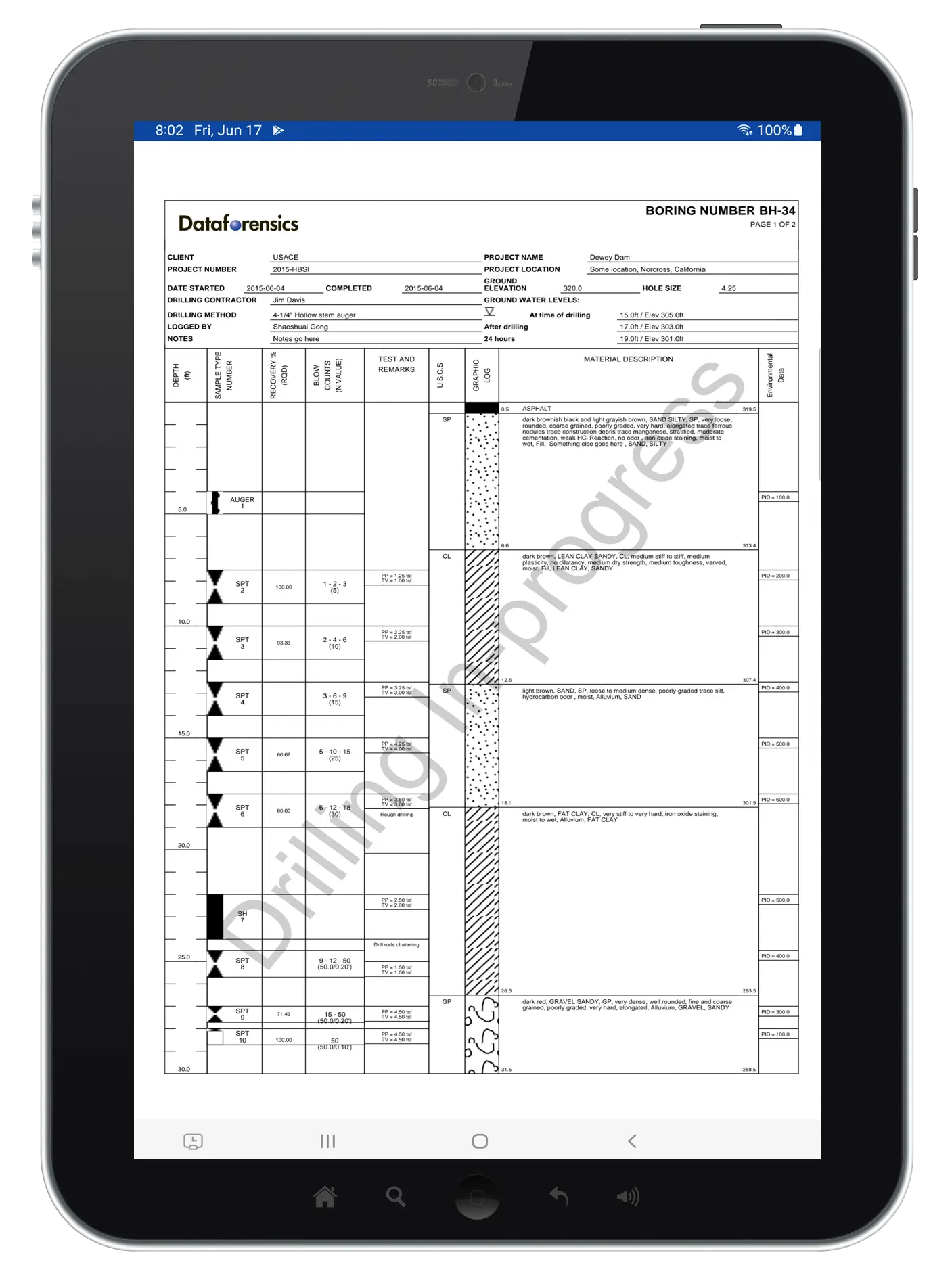
MetroGeotech implemented Dataforensics to digitize and standardize its field data collection process. Structured logging templates replaced paper forms, allowing field engineers to capture borehole, sampling, and site data directly within a consistent digital framework. The platform’s cloud synchronization enabled office teams to access project data in real time, eliminating delays between collection and review.
Project managers established validation workflows to ensure all entries met internal QA and DOT compliance requirements before report generation. Instead of manually consolidating spreadsheets and formatting documentation, the team began generating structured, client-ready reports directly from the platform.
Within weeks of deployment, both field and office teams were operating within a unified workflow. Data moved seamlessly from site collection to validated reporting, significantly reducing friction between departments.
Following implementation, MetroGeotech experienced measurable operational improvements across its transportation projects. Reporting turnaround time decreased by 45%, allowing the firm to meet aggressive submission deadlines with greater consistency. Documentation errors were reduced by approximately 40%, strengthening audit readiness and internal quality control processes.
Project managers gained real-time visibility into field progress, improving coordination across districts. Instead of reacting to last-minute documentation gaps, teams could proactively review and validate data throughout the project lifecycle.
Most importantly, the firm increased its capacity to take on larger, multi-phase projects without expanding administrative staffing. Structured workflows improved efficiency while reducing operational risk—positioning MetroGeotech for continued growth.
“Dataforensics fundamentally changed how we manage project documentation. Our reporting process is faster, more consistent, and far easier to audit. The visibility between field and office teams has made a measurable difference in both efficiency and client confidence.”
Daniel Reeves, Senior Project Manager, MetroGeotech