
Design-Build Infrastructure
Highway Expansion & Bridge Reconstruction
45+ Engineers, Inspectors & Project Managers
Midwest United States
Apex Infrastructure was awarded a multi-year highway expansion project involving geotechnical investigations, bridge foundations, and environmental monitoring. With multiple subcontractors, field inspectors, and engineering teams operating simultaneously across job sites, documentation quickly became complex.
Each discipline maintained its own logging formats and reporting workflows. Field data was often captured in spreadsheets or handwritten notes before being emailed to project managers for consolidation. As reporting deadlines approached, office teams spent significant time reconciling inconsistencies between contractor submissions, correcting formatting discrepancies, and validating missing data points.
Version control became a recurring issue. Updates to borehole logs or field observations sometimes required multiple revisions across shared files, increasing the risk of outdated documentation being submitted. With strict DOT oversight and tight project timelines, leadership needed a centralized system that could bring structure and visibility to the entire field-to-report process.
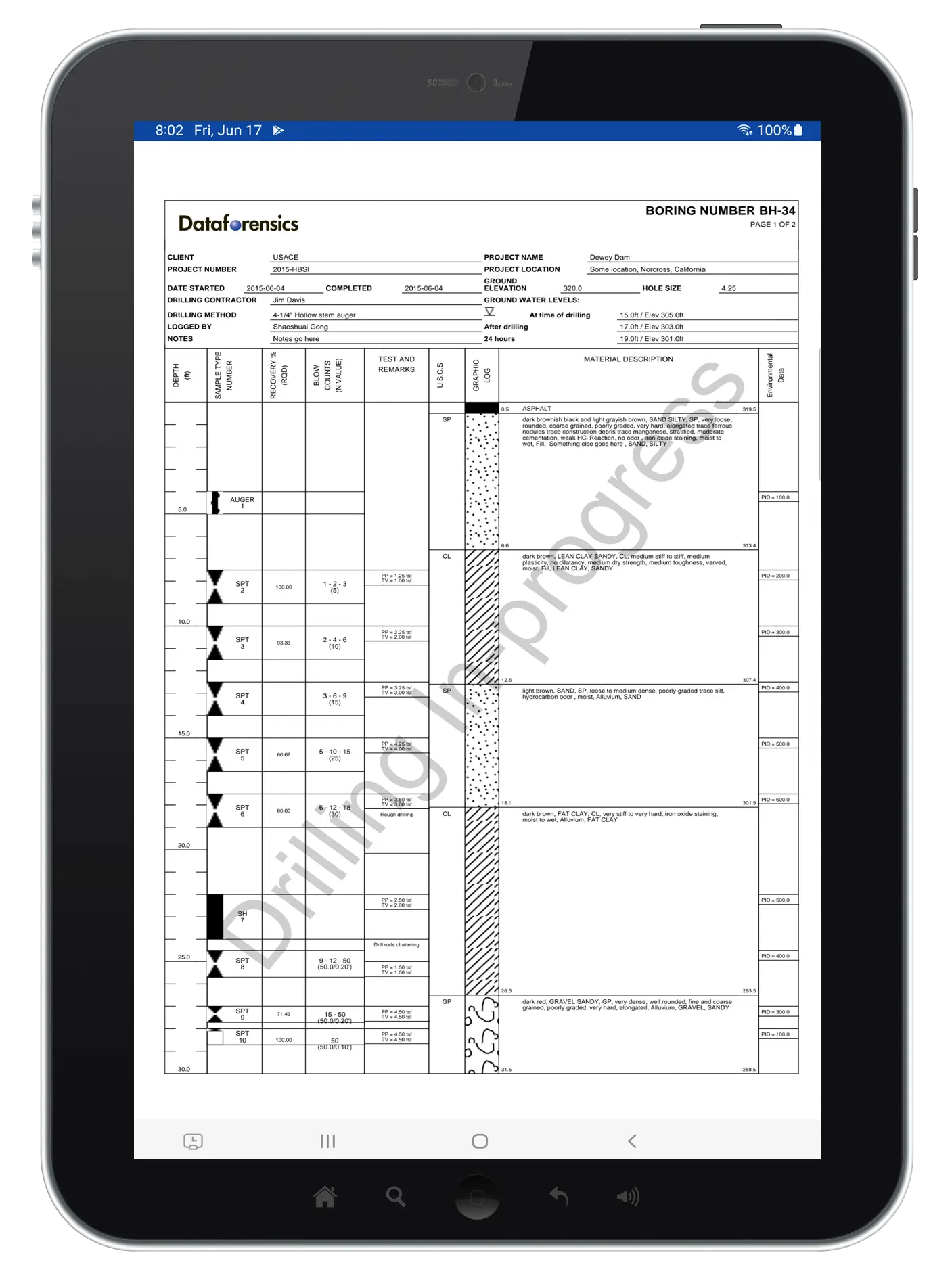
Apex Infrastructure implemented Dataforensics as a standardized platform for all geotechnical and inspection data across the project. Digital logging templates were deployed to field teams, ensuring consistent data entry regardless of contractor or discipline. Instead of working in isolated spreadsheets, all field documentation was captured within a unified, structured system.
As data was entered in the field, it synced securely to the centralized cloud platform, giving project managers real-time visibility across active job sites. Role-based permissions were established to maintain clear review and approval authority, preventing unauthorized edits and maintaining version integrity.
Automated report generation replaced manual formatting processes. The system compiled validated data into structured reports aligned with DOT requirements, significantly reducing the time spent consolidating documentation across teams.
Within the first six months of implementation, Apex Infrastructure reported measurable improvements in project coordination and reporting efficiency. Documentation turnaround time improved by approximately 38%, reducing delays in regulatory submissions. Cross-team inconsistencies decreased significantly, and QA review cycles became more streamlined.
Project managers gained confidence knowing that all field data was stored in a centralized, auditable system. Version control issues were virtually eliminated, as structured workflows ensured that only approved data moved forward into official reports.
By standardizing field data capture and automating reporting processes, Apex Infrastructure strengthened compliance oversight while maintaining momentum on a high-value, schedule-sensitive project. The platform supported both operational efficiency and risk mitigation, critical factors in large-scale design-build environments.
“Managing documentation across multiple teams was one of our biggest operational challenges. Dataforensics brought structure and visibility to the process. We reduced reporting delays and improved coordination across contractors without adding administrative overhead.”
Laura Mitchell, Program Director, Apex Infrastructure